

Flourish
A Targeted Approach to Skin Rejuvenation
IPL photofacial in Menlo Park
Schedule AppointmentTreating What’s Under the Skin, Not Just the Surface
IPL Photofacial in Menlo Park, treating redness and sun damage at the source with broad-spectrum light, best suited to fair to medium skin tones.
An IPL photofacial in Menlo Park addresses 2 common concerns most patients think are separate: redness from visible blood vessels and discoloration from years of sun exposure. Both respond to the same broad-spectrum light technology, which is why IPL and BBL (Broad Band Light) are often grouped together, treating vascular and pigment concerns in a single session.
This treatment works best on fair to medium skin tones, since the light targets pigment differences that are harder to isolate safely in deeper skin. Your provider confirms candidacy at your consultation, and if IPL isn’t the right fit, we’ll recommend an alternative that is.

Details
learn about
Benefits
Reduces visible redness and broken capillaries
Fades sun spots and uneven pigmentation
Minimal downtime, often none at all
Improves overall skin tone and texture
Treats the face, neck, chest, or hands
Series of sessions builds cumulative improvement
Conditions It Treats
Rosacea and general facial redness
Sun damage and dark spots
Broken capillaries and visible blood vessels
Age spots and sun-induced freckling
Uneven skin tone
Mild post-inflammatory redness
Areas It Treats
Face
Neck
Chest and décolletage
Hands
Forearms



Multiple Concerns, One Powerful Light Source
Our IPL photofacial in Menlo Park uses broad-spectrum light absorbed differently depending on what it hits. Excess pigment absorbs the light and breaks down into smaller particles your body clears naturally, fading spots and discoloration. Blood vessels absorb the same light differently, causing them to collapse and gradually fade, reducing visible redness.
Because rosacea and sun damage involve different underlying mechanisms, even though they respond to the same device, your provider adjusts settings based on which concern you’re treating. We’ve written more on the specific mechanisms behind each on their own pages, since both deserve a fuller explanation than fits here. Most patients complete 3 to 5 sessions, spaced 3 to 4 weeks apart, to see full results.


What to Expect
Who’s Operating the Device
Noor Mashal, MS, PA-C, performs most IPL Photofacial and BBL treatments at Entre Nous Aesthetics, drawing on a clinical background in both emergency medicine and plastic surgery, including hands-on laser and injectable experience. Caity Lizotte, MSN, FNP-C and founder Sandra K. Ewers, MS, PA-C also perform this treatment when needed. All 3 providers are trained on our BBL device and evaluate your skin type before recommending it.


Let’s Talk About What You Actually Want
Every treatment plan starts with a conversation, not a script. Tell us a little about your goals, and we’ll take it from there.
"*" indicates required fields
Frequently Asked Questions
Intense pulsed light (IPL) and Broad-band light is light-based aesthetic photorejuvenation technology for removing brown spots due to sun exposure (lentigines and freckles), red vessels (telangiectasias), red spots or bumps (cherry angiomas), spider angiomas, and general redness from rosacea. IPL has a similar mechanism of action to lasers, but because it emits a broad spectrum (or band) of visible light wavelengths, rather than one specific wavelength, it is not a true laser. At Entre Nous Aesthetics, we use Sciton’s BBL (broad-band light) device, which we believe is the best.
IPL/ BBL emits very bright light, hence the word “intense”. Goggles, glasses and/or FDA-approved eye shields are always worn during treatments. The light energy is converted into heat energy when IPL hits its target, destroying only the target, such as brown spots or red vessels. Modern IPL/ BBL devices can avoid focusing on the surrounding skin melanin (thereby protecting it) because the various machine settings can be configured to not “see” it. However, the greater the contrast (darkness) between the spot and your normal skin, the better the spot will uptake the energy resulting in excellent results.
The most common areas treated are face, neck, chest, hands, forearms, shoulders. However, any non-hair bearing area of the body can be treated. IPL/ BBL can permanently remove dark hair because it is pigmented by melanin. Melanin, which pigments hair and brown spots, and oxy-hemoglobin, which pigments blood, are the targets of IPL/ BBL.
You will first need a consultation to discuss your goals, answer questions, and to determine whether you are a good candidate for IPL/ BBL treatment.
Depending on the area(s) treated, 30 to 60 minutes will be reserved for your treatment. You should arrive with non-tanned, clean skin. Pre-treatment photos will be taken. If your provider has recommended topical anesthetic (cream or ointment), you will arrive 30 to 60 minutes prior to your appointment, depending on how numb you would like the skin to be.
Once the anesthetic cream is removed, protective eyewear is placed and a thin layer of ultrasound gel is applied to allow better light conduction to the skin. The IPL head is a very cold, sapphire crystal, which also helps with the uncomfortable pulses from the machine. You will feel a very quick sensation, similar to a rubber band snapping. Occasionally, we will use a cooling machine to help with discomfort during the treatment.
Modern IPL/ BBL devices cause less swelling than older technologies. Swelling is uncommon and occurs more frequently after treating red vessels than for brown spots. It usually resolves within hours up to a few days. Icing immediately after treatment, and for the first 24 to 48 hours, helps. Your provider will guide you and may give you an ice pack to take home.
The better you are with sun avoidance and applying sunscreen to the area, the longer your results will last. We recommend applying an antioxidant under your sunscreen to protect against the rays that get through the sunscreen. Some of the sun’s rays penetrate through sunscreen, so avoiding direct sun by wearing a hat, staying in the shade, and any other means of blocking direct sun from the area of your skin will significantly slow brown spots from returning. Some people return in 1 year, some in 3 to 5 years for re-treatment, depending on how well they prevent continued sun damage.
IPL and BBL work best on fair to medium skin tones, since the light targets pigment differences that become harder to isolate safely in deeper skin. If your skin tone isn’t a good candidate, your provider will recommend an alternative to address your concerns, since safety and appropriate technology selection matter more than defaulting to one device.
Most patients complete 3 to 5 sessions, spaced 3 to 4 weeks apart, to see full improvement in redness and pigment. Some patients with milder concerns see meaningful results sooner, while significant sun damage or persistent redness may benefit from a longer series.
Most patients describe the sensation as a light rubberband snap rather than significant pain. A cooling gel protects the skin and improves comfort throughout. Sensitivity varies by treatment area and individual tolerance, and numbing cream typically isn’t necessary.
Yes. An IPL photofacial in Menlo Park treats both concerns using the same device, since broad-spectrum light responds to pigment and blood vessels differently. Your provider adjusts settings depending on which concern is more prominent, and many patients see improvement in both areas across their series.
Our providers evaluate your type honestly before recommending IPL, rather than treating every patient the same way. As an independently owned, clinician-led practice, we’ll tell you when a different treatment fits your skin better, even when that means recommending something other than IPL.



Be Our Guest
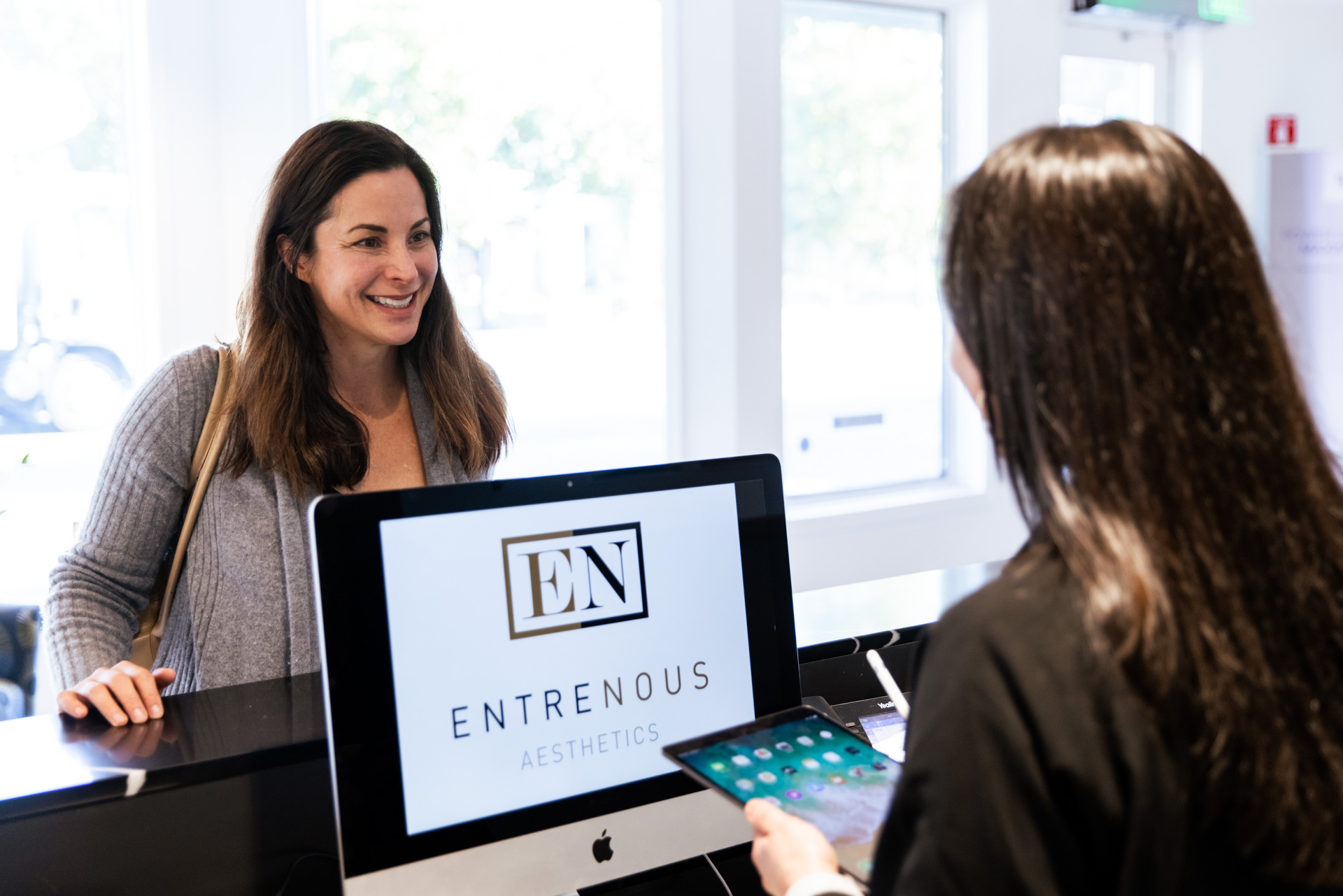
Contact us to set up a virtual consultation or an in-office visit. You can also use our interactive eConsultation tool to tell us your concerns and get a personalized treatment plan in the comfort of your own home.